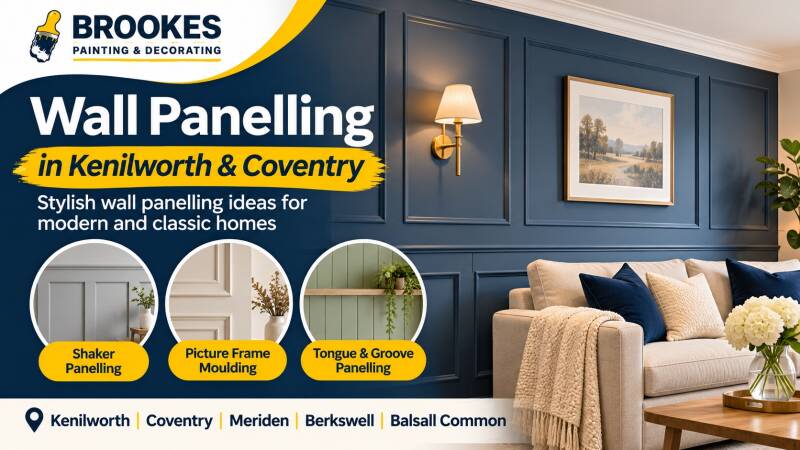
Quick answer: wall panelling adds texture, character and wear protection to a room, and the best results come from careful planning, accurate measuring, proper caulking and a durable painted finish. Panelling is a finishing trade as much as a joinery one, because the paint and filling decide how professional it looks.
Wall panelling has moved from period drama to everyday homes. Picture frame mouldings in hallways, shaker style panels behind a bed, tongue and groove in a snug: all of it adds architectural interest to rooms that might otherwise feel flat. It suits older properties in Kenilworth, Meriden and Berkswell, and it works just as well in newer homes in Coventry and Balsall Common that lack original detail.
This guide explains the main styles, how to choose between them, how panelling is prepared and finished, and the mistakes that cause a panelled wall to look amateur. We are decorators, not joiners, so we also say clearly where the decorating stage sits in a panelling project.
What Is Wall Panelling?
Wall panelling is any decorative or protective covering applied to the lower or whole part of a wall, made from timber, MDF or similar board. It has a long history in British homes, where heavy oak panelling lined grand rooms, and lighter versions such as dado panelling and wainscoting protected walls from scuffs.
Today panelling is usually fitted to an existing wall, built from strips of moulding or sheets of board, then filled, caulked and painted so the whole thing reads as one continuous finish. The final painting is what ties it together.
The Main Styles of Panelling
Picture frame moulding. Thin rectangular frames made from slim moulding are fixed directly to the wall in a regular grid. It is one of the most popular styles, because it gives a classic, tailored look with relatively little material. It works well in hallways, dining rooms and bedrooms.
Shaker panelling. Flat rectangular panels with a simple recessed or framed edge, clean and understated. Shaker is popular in contemporary and country style homes, and its simplicity means proportions and spacing matter a great deal.
Tongue and groove. Narrow vertical boards that interlock, often used at dado height or the full wall. It suits cottages, boot rooms and bathrooms where a country feel is wanted, though in bathrooms the materials need to cope with moisture.
Board and batten. Wider flat boards with narrow battens covering the joins, giving a slightly more rustic, vertical look.
Slatted or fluted panelling. Narrow vertical slats, fixed to a board backing, creating a modern, rhythmic texture. It is popular in living rooms, behind televisions and in hallways.
Traditional raised and fielded panelling. Heavier, more elaborate panels with moulded edges, usually associated with period rooms and often made by specialist joiners.
Where Panelling Works Best
Panelling suits a surprising range of rooms.
Hallways and stairs. The lower wall takes the most knocks, so painted panelling protects it while adding character. See our guide to staircase and hallway decorating for finishes that stand up to daily use.
Bedrooms. Panelling behind a bed creates a headboard effect and a calm focal point, with no need for extra furniture.
Dining rooms and living rooms. A panelled lower wall or a fully panelled feature wall gives depth, and it works well with the deeper colours we discuss in our guide to colour trends for Coventry homes.
Home offices. A panelled wall behind a desk makes a considered, camera friendly backdrop, as covered in our guide to home office and garden room decorating.
Children's rooms. Panelling at dado height protects walls from scuffs and can be repainted easily as tastes change, which fits the durable approach in our guide to nursery and children's bedroom decorating.
Utility rooms and boot rooms. Hard wearing panelling in muddy, busy spaces copes well, particularly in village and country homes.
Panelling is less suited to rooms with heavy, ongoing moisture, which is why bathrooms need careful material choices, covered in our guide to bathroom redecorating.
Panelling in Older Homes
Many older homes in Kenilworth, Meriden and Berkswell would originally have had some form of panelling or dado treatment, and reintroducing it can feel natural. There are a few cautions.
Solid, breathable walls can trap moisture if panelling is fixed tightly against them without any air gap, and damp behind panelling is hard to spot. In a period property, it is worth checking the condition of the wall first and considering how the panelling is fixed. Our guide to decorating older homes across Coventry and our guide to decorating period and village homes explain how old walls behave.
If your property is listed or in a conservation area, check whether fixing panelling needs consent, since some internal alterations to listed buildings are controlled. The Planning Portal is the place to start.
Panelling in Newer Homes
In a new build or modern home, walls are usually flat, plain and uniform, and panelling is one of the best ways to give them personality. It is also easier technically, because plasterboard walls are generally straight and consistent. Our guide to decorating a new build explains why it is wise to let the walls settle before fixing anything permanent, since movement can crack caulk lines in the first year.
Planning the Layout: Where Most Projects Succeed or Fail
The difference between panelling that looks custom and panelling that looks DIY is almost always planning. Good layout involves:
Height. A common guide is to panel to around one third of the wall height for a classic look, or higher for a bolder effect. In rooms with a dado rail, picture rail or window sills, aligning to existing features helps.
Spacing. Frames or panels should be evenly spaced and sized so the whole wall looks balanced, including around corners and doors. A wall that ends with a narrow sliver of panel looks awkward.
Obstacles. Sockets, switches, radiators, light fittings and skirting boards all need to be accounted for before anything is fixed. Where possible, electrical fittings may need moving or extending, and that work should be done by a qualified electrician before decoration.
Proportions. Tall ceilings can carry larger panels, while low ceilings look better with slimmer, more restrained detail.
Marking the layout on the wall with masking tape before fixing anything lets you see it in the room and adjust it.
Materials: MDF, Timber and Others
Most modern panelling is made from MDF, because it is stable, smooth and takes paint well. It cuts accurately and costs less than hardwood, though it needs sealing and cannot be allowed to get wet. Timber, including softwood and hardwood, offers more natural strength and can be stained or painted, but it moves with humidity and needs more care in joints.
Pre made panelling kits and flexible mouldings are widely sold, and some include ready primed components. Whatever the material, all cut edges should be primed before painting.
Fixing and Preparation
Fixing is joinery, and either a joiner or a competent DIY fitter can do it. From a decorator's point of view, what matters is how the panelling is left, because the finish depends on it.
A good fix leaves joints tight, nail holes filled, gaps at edges caulked and surfaces smooth. Fixing is usually by adhesive and fine pins, with the pin holes filled before painting. Gaps between panelling and wall, and between panelling and skirting, should be sealed with flexible decorators' caulk, which gives clean, crisp lines once painted.
The Painting Stage: What Makes It Look Professional
Panelling is a finishing trade, and the paint work decides the final result. A professional approach includes:
Filling and sanding. Every pin hole, joint and imperfection is filled and sanded smooth, so the surface looks like a single piece.
Caulking. Gaps are sealed neatly, giving continuous lines between the panelling, wall and ceiling.
Priming. MDF and bare timber need a suitable primer, and cut edges especially, to prevent swelling and uneven absorption.
Undercoat and topcoats. Two thin topcoats of a durable finish give depth and a hard wearing surface. We usually recommend a satinwood or eggshell on panelling, because it wipes clean and highlights the profile without being too shiny.
Cutting in. Crisp lines between panelling, upper wall and ceiling make the project look finished.
Where a very smooth finish is wanted, spraying can be an option for removable or freestanding items, as we explain in our guide to spray painting versus brush and roller. For panelling fixed to a wall, brush and roller with careful technique is usually the practical route.
Colour Choices for Panelling
Colour is where panelling comes alive. There are two broad approaches.
Tone on tone. Painting the panelling and the wall above in the same colour creates a subtle, sophisticated look that relies on shadow and texture. It works well in smaller spaces.
Contrast. A deeper colour on the panelling, with a lighter wall above, gives a classic dado effect, and it hides scuffs where they matter most.
Full colour drench. Painting panelling, walls, ceiling and sometimes woodwork in one rich colour creates an immersive effect, popular in snugs, studies and dining rooms.
Test samples on the actual panelling, because the shadows between panels change how a colour reads. Our interior paint guide for Coventry homes explains how sheen and light affect colour.
Panelling and Wallpaper
Panelling and wallpaper combine beautifully. A common approach is panelling on the lower wall, with wallpaper above, giving a layered, period feel. Wallpaper should be hung above the panelling after the panelling is fixed and painted, with a clean top edge. Our wallpaper installation guide for Coventry homes covers pattern repeats and preparation.
Practical Considerations
Fire safety. In rental properties and shared homes, check that any wall coverings and decorations do not compromise fire safety requirements, particularly in escape routes. Our guide to landlord and rental redecorating mentions HMO considerations.
Maintenance. Painted panelling is easy to wipe clean, but dust can gather in grooves, particularly on fluted or slatted styles.
Future changes. Panelling is a semi permanent change, and removing it can leave wall damage. If you rent, check what your agreement allows.
Moisture. Avoid fixing MDF panelling in rooms with heavy steam, and check for damp on external walls before covering them.
A Typical Panelling Project
A typical project starts with a conversation about the room, how it is used and what look you want. We look at the walls, the existing features and the practical constraints, and help you decide on style, height and colour.
Where the panelling itself is being fitted by a joiner or by you, we agree the order of work so decorating follows once everything is fixed. We then fill, caulk, prime and paint, leaving crisp lines and a durable finish. Our approach to sequencing follows the principles in our guide to the right order for a whole house renovation.
Common Panelling Mistakes to Avoid
Skipping the layout. Without a taped out plan, panels end up uneven, with awkward slivers at corners and doors.
Unsealed gaps. Unfilled joins and gaps at the wall and skirting show up as dark lines once painted.
Bare MDF edges. Cut edges soak up paint and can swell, so they need priming.
Wrong sheen. A flat matt finish marks easily, while high gloss highlights every flaw. Satinwood or eggshell is usually the sweet spot.
Rushing the cutting in. Crisp edges at the ceiling and top rail are what make panelling look tailored.
Ignoring electrics. Sockets and switches need planning before panels go up, not after.
Looking After Painted Panelling
Painted panelling is easy to keep fresh. Dust it regularly, especially fluted and slatted styles where dust settles in grooves, and wipe marks with a soft damp cloth and mild soap. Keep a little of the original paint for touch ups, because small chips are inevitable in busy hallways. Avoid harsh abrasives, which dull the sheen. With basic care, a well finished panelled wall will look good for many years across homes in Coventry, Kenilworth, Meriden, Berkswell and Balsall Common.
Combining Panelling With Other Features
Panelling pairs well with other architectural details. Picture rails, cornices and deep skirting boards make a room feel cohesive, and statement lighting or artwork looks striking against a painted panelled wall. Where you want an even richer look, a decorative finish above the panelling can add contrast, as covered in our guide to decorative and textured wall finishes.
Panelling in Rental and Shared Homes
If you rent, panelling needs your landlord's permission, because fixing it alters the walls. Some landlords are happy for a well finished feature wall, especially where it adds value, while others prefer removable options. Landlords planning panelling in a let property should consider durability, fire safety in escape routes and how easily it can be repainted between tenancies. A hard wearing satinwood finish makes touch ups straightforward, which suits busy rental properties across Coventry, Kenilworth and the surrounding villages.
Frequently Asked Questions
Q: What type of paint is best for wall panelling? A: A durable satinwood or eggshell is a popular choice, because it wipes clean and shows the profile, with a proper primer on MDF and bare timber first.
Q: How high should wall panelling go? A: A classic guide is around one third of the wall height, though taller panelling creates a bolder look. Aligning to existing features such as dado lines or window sills helps the layout feel natural.
Q: Can panelling be fitted in a period property in Kenilworth or Berkswell? A: Often yes, but solid walls can trap moisture behind tight fixing, and listed or conservation area homes may need consent. Check the wall condition and any restrictions first.
Q: Is MDF panelling suitable for a bathroom? A: Standard MDF is not ideal for wet areas, because moisture can swell it. Moisture resistant boards, tiles or specialist systems are better choices for bathrooms.
Q: Do you paint wall panelling in Coventry, Kenilworth, Meriden, Berkswell and Balsall Common? A: Yes. We handle the filling, caulking, priming and painting that make panelling look professional, across all five areas.
Get Your Panelling Finished Properly
Panelling only looks right when the decorating is done carefully. If you are planning panelling in Coventry, Kenilworth, Meriden, Berkswell or Balsall Common, we would be happy to talk through the finish. Get in touch through our contact page or call 07531509261, or see examples of our work on our photos page.